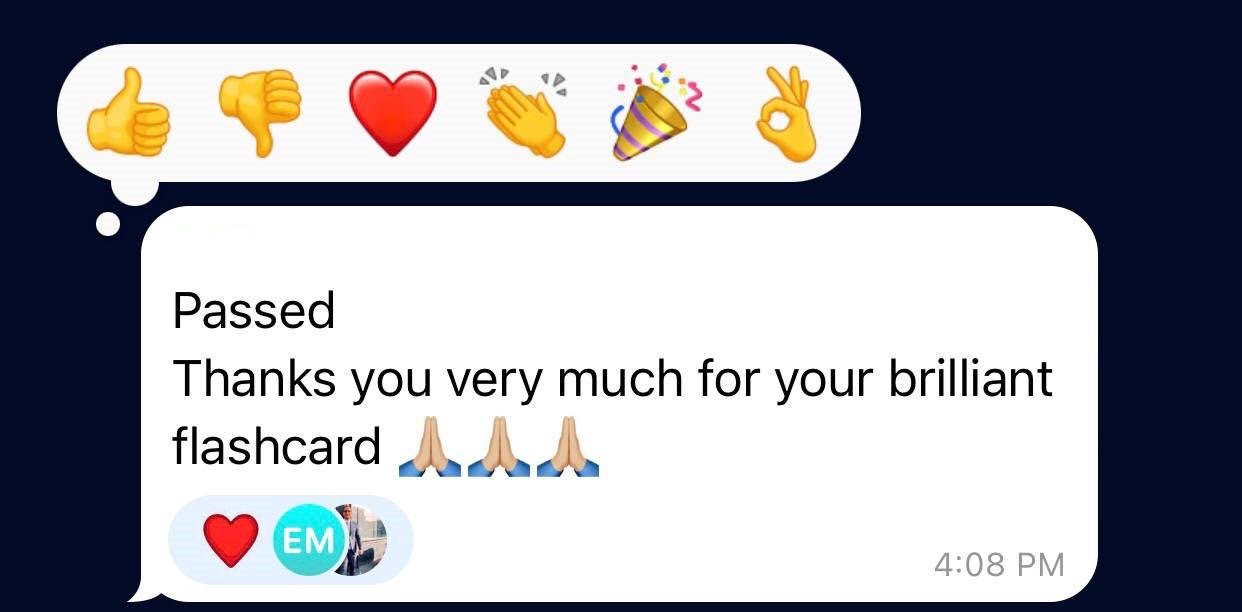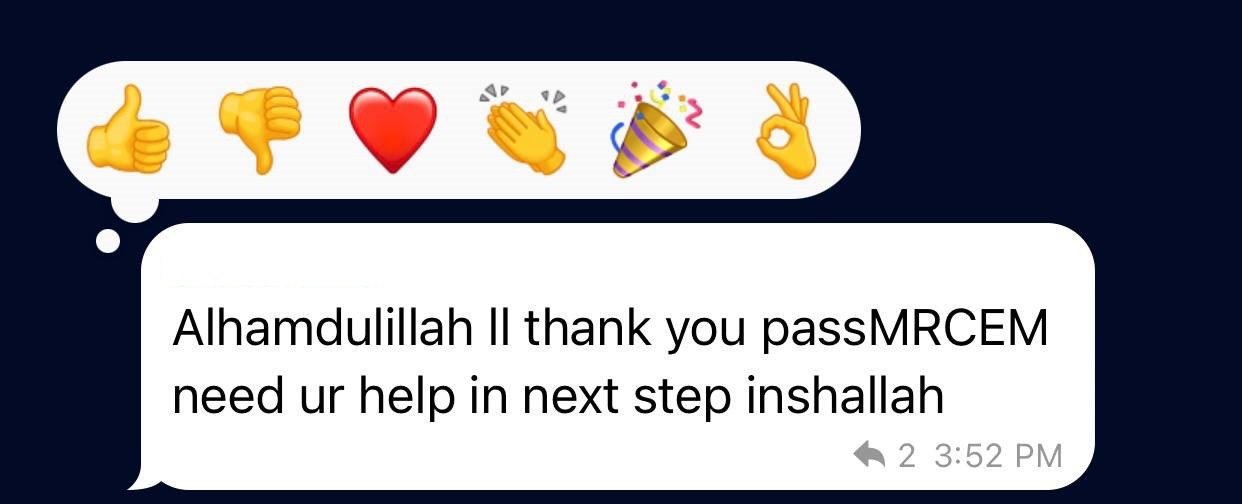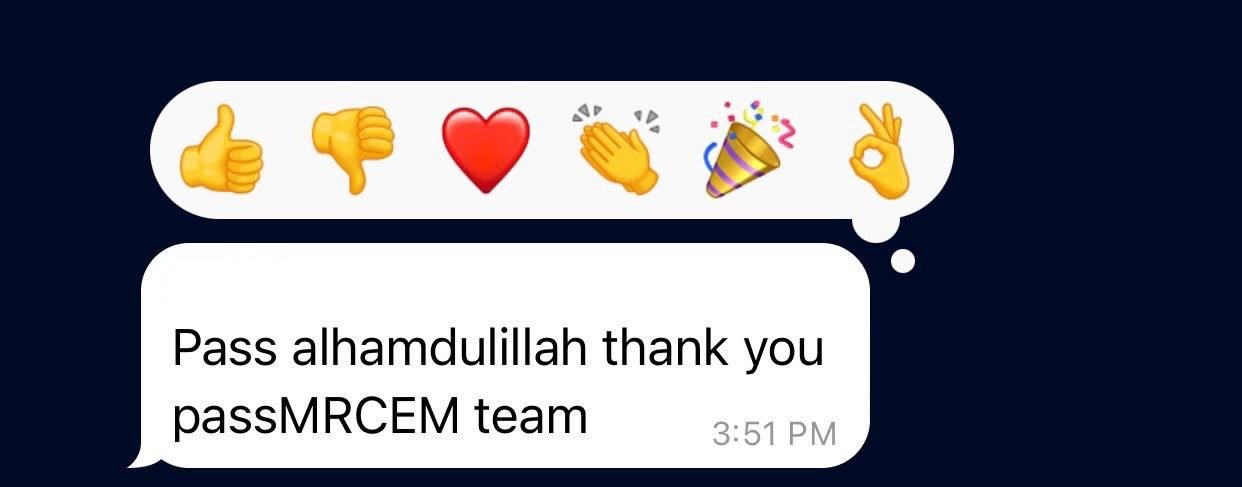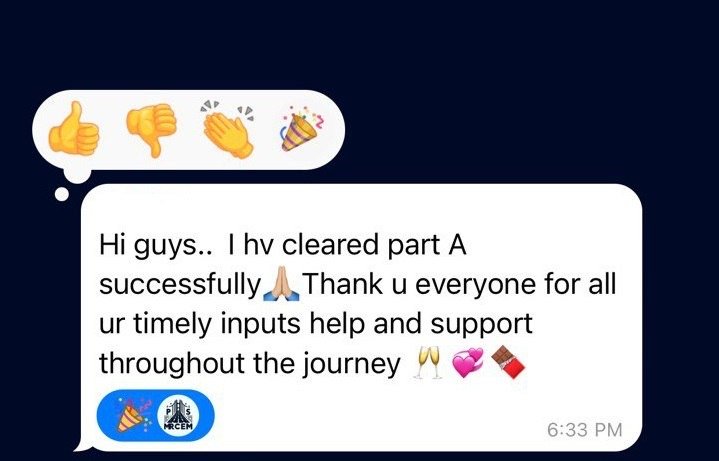
Candidate Success Stories

Discover how busy Emergency Medicine professionals and international medical graduates transformed their exam preparation with PassMRCEM.

Detailed Candidate Experiences

Passing in 3 Months: An Experience with the MRCEM Primary Exam (May 2024)

Peace be upon you. I would like to share my experience with the first part of the Membership of the Royal College of Emergency Medicine (MRCEM) exams, which consist of three parts. The first part covers basic medical knowledge such as anatomy and pharmacology.

The reason I decided to book the exam was the encouragement of a friend who had previously passed it. My actual preparation period lasted for three months, during which there were periods of interruption due to social reasons and work conditions.

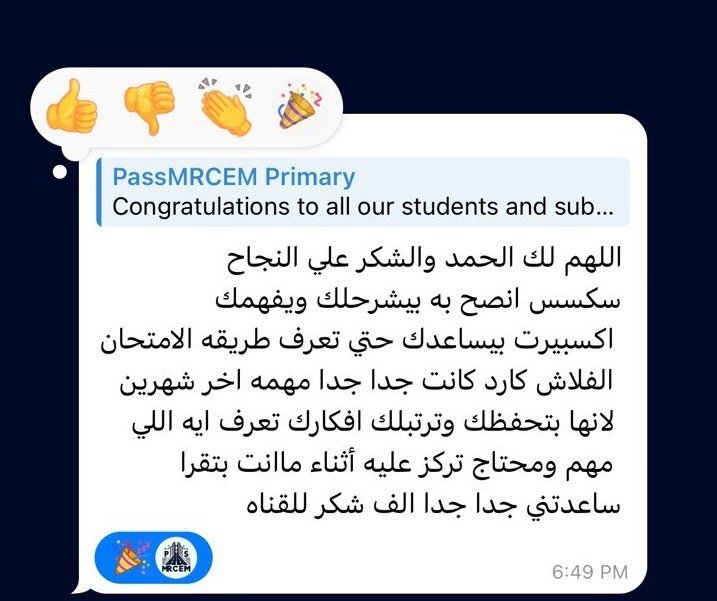
“PassMRCEM flashcards were the most important resource in my journey… Their importance lies in their easy accessibility, allowing me to study during breaks at work, as well as during otherwise wasted waiting times throughout the day.”

First Half (Two Months):
I started my preparation by getting acquainted with the study material by reading lessons and solving questions from standard question banks. During this period, I was not fully focused, and the surrounding environment was not conducive to serious studying. I completed only 60% of the material and focused on the heavier sections: anatomy and physiology.

After finishing the above, I felt that the exam date was approaching, and I was still far from mastering the required syllabus. I didn’t feel confident, so I decided to change my approach.

Second Half (The Last Month):
I can now say that after passing the exam with a relatively high score, this period was the key to my success. I relied heavily on:

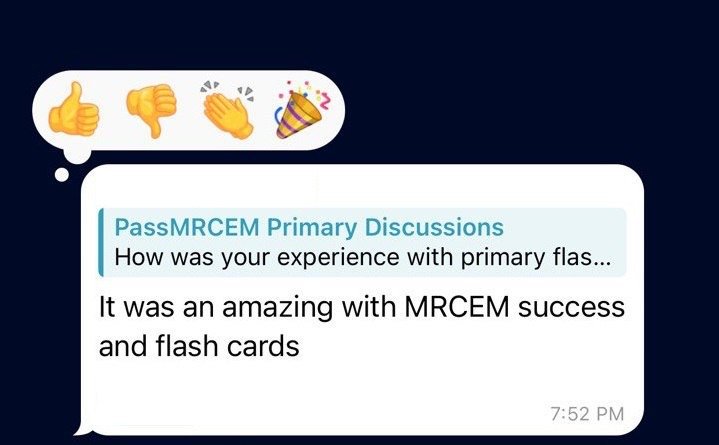
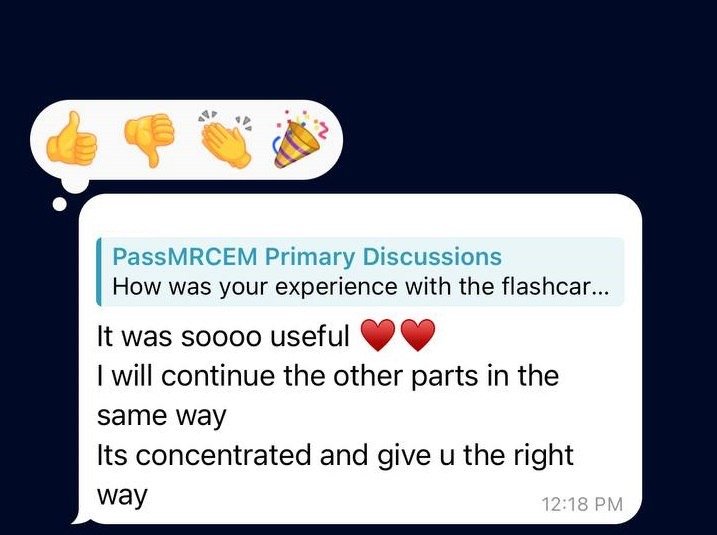
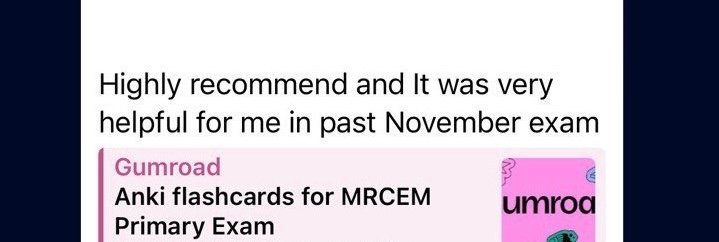
  • PassMRCEM flashcards: They excelled in presenting information and making it easy to understand and memorize. The question format is complete, and each question is followed by its answer. I reviewed all the flashcards more than four times.
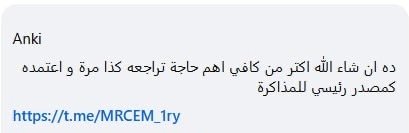
  • PassMRCEM Primary Telegram Channel: Full of important questions and notes that are frequently repeated in the exam.

On Results Day:
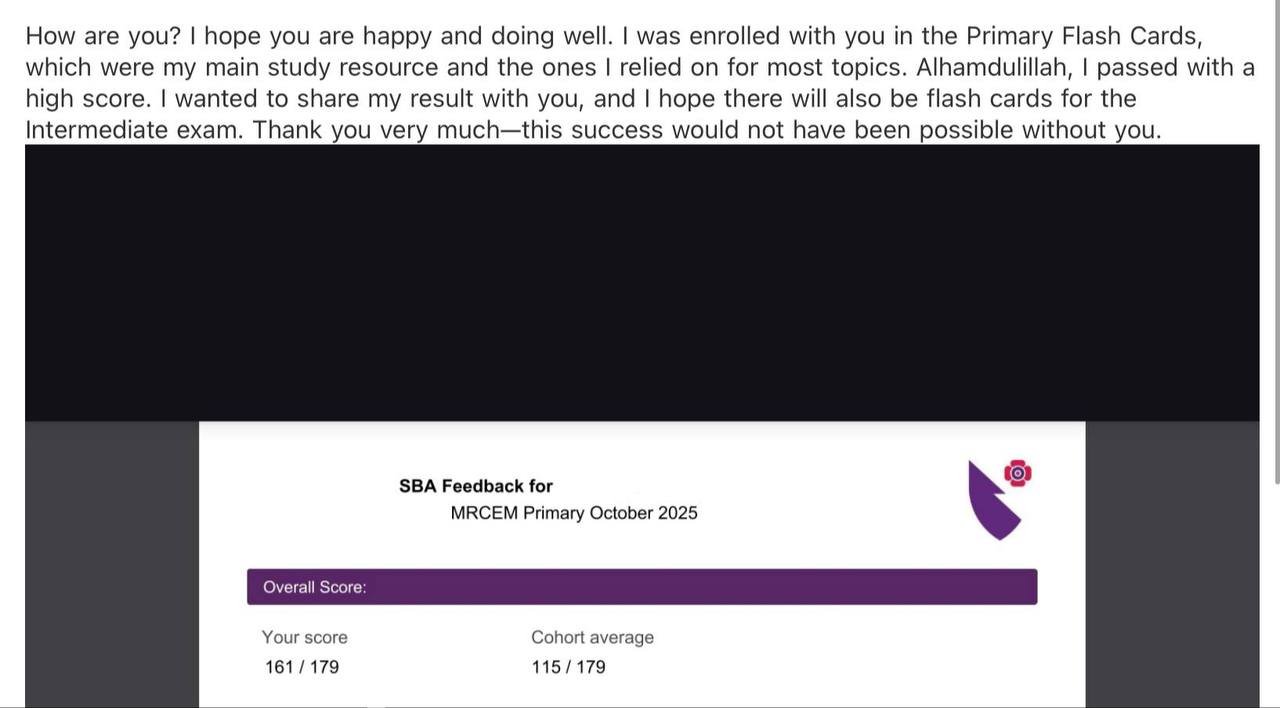
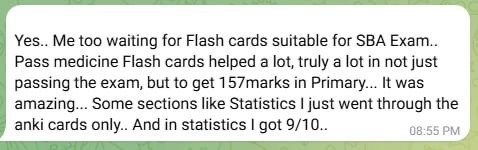
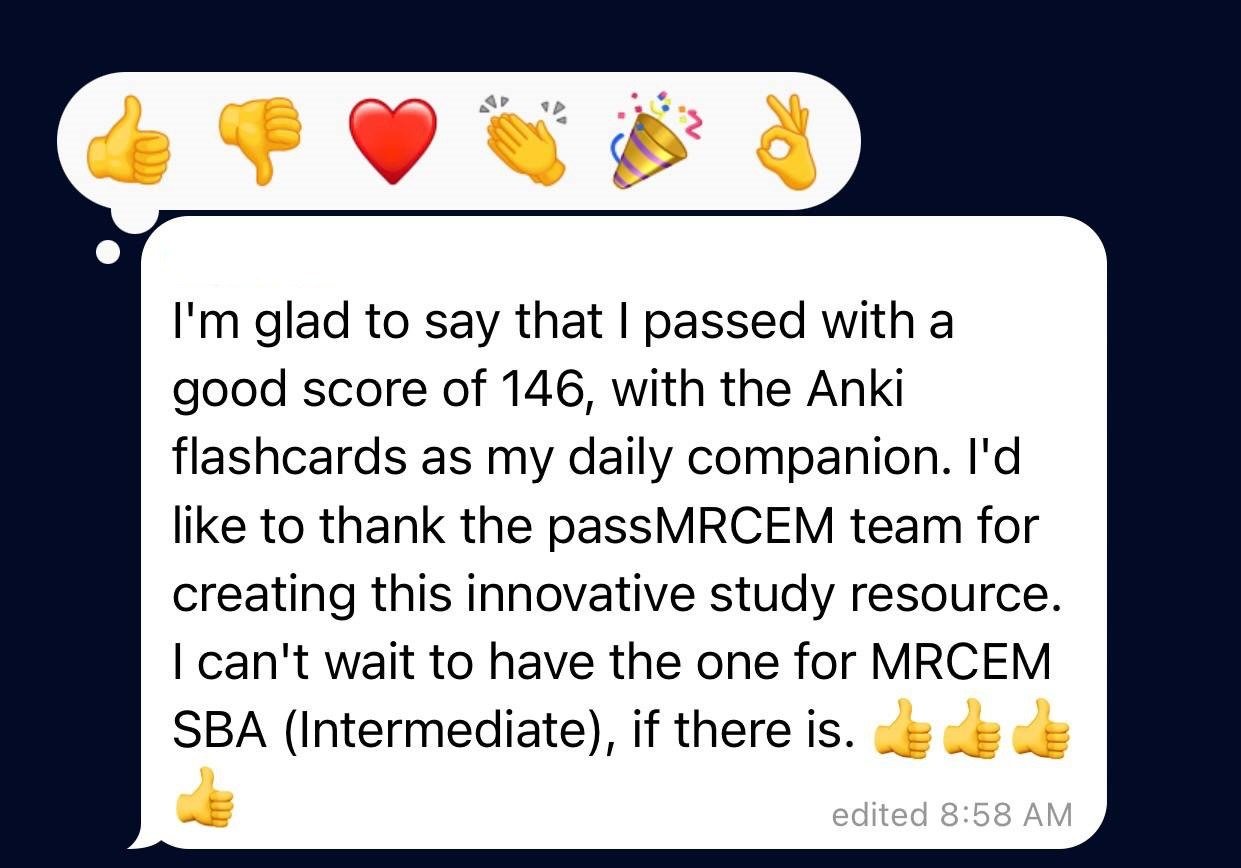
Thanks to God alone, the result appeared successful with an excellent score exceeding my expectations at 141 (Passing score is usually 104-107).

Balancing Work, Family, and the Primary Exam (November 2023)

This is a summary of my experience in taking the Royal College of Emergency Medicine Membership Examination. My purpose in taking this exam is to obtain membership so that I can register with the GMC and practice in the UK.

The most important challenges I faced were the lack of time due to my work conditions and family obligations. I started preparing approximately four months before the exam date. I deducted 15 hours a week from my time to study.

“The idea of ANKI [Spaced Repetition] is an excellent idea in preparing to measure your level and know what is difficult for you and what is easy for you.”

The Strategy:

  • The first part exam, like any exam, requires organizing time and effort.
  • Individual reading is very important and has the greatest weight in achievement.
  • Group reading is very important, as it removes misunderstanding through discussion.
  • I reviewed the recall from the flashcards over and over again.

Exam Day Strategy:
During the exam, questions I was certain of, I answered directly. Questions I doubted, I marked with a β€œFlag” and left. Questions I did not understand at all, I skipped. I finished the exam in approximately two hours, not giving any question more than 90 seconds. Then I returned to the flagged questions.

At ten o’clock GMT on results day, the result appeared and showed that I passed, thank God, and got a grade of 139.

Consolidating Information Remarkably (November 2023)

My study method for the exam can be divided into three stages. The final stage was a month before the exam. During this time, I used the flashcards (with over 950 cards at the time), reviewed them more than 7 times, and found them extremely beneficial in consolidating information remarkably.

“Use the flashcards; they are highly beneficial and can be used anywhere, especially during downtime like waiting times and transportation.”

Quick Tips:

  • Focus primarily on Anatomy, Physiology, and Pharmacology, followed by Microbiology.
  • New questions do not deviate from the concepts that need to be studied; therefore, reading the concepts with precision is more important than just knowing the answer.
  • Do not rely on retaking the exam; it may discourage you from the effort.

Ready to Write Your Own Success Story?

Join the platform trusted by successful candidates to turn basic science into rapid clinical recall.

Subscribe Now
Expanded View